The most important factor in the life of an insect screen system is regular, correct maintenance. What needs to be done is brief, but it varies with the system type.
## The common rule: cleaning rails and channels
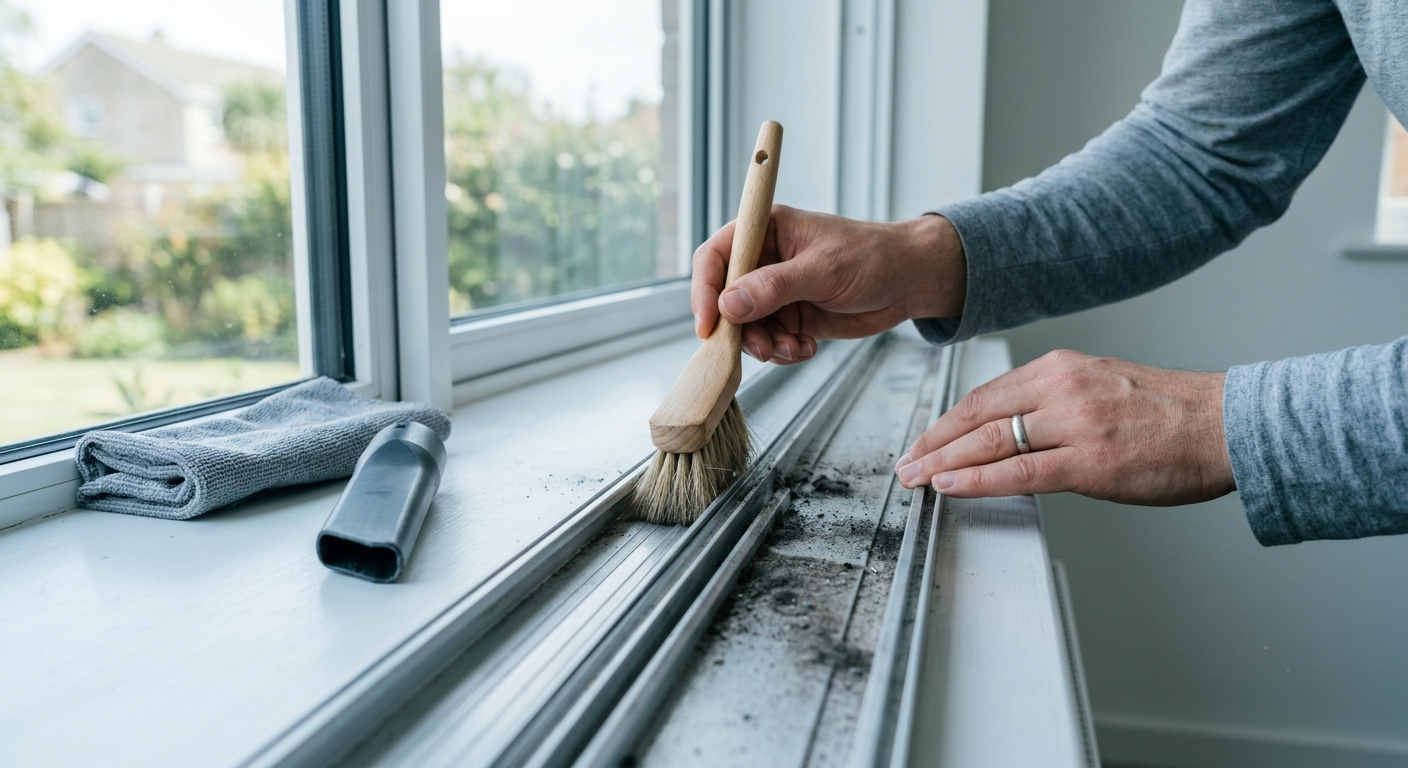
In all moving systems, the most common cause of faults is dust, sand and hair collecting in the bottom rail or guide channel. This build-up strains the sash, puts unnecessary load on the rollers and wears the mechanism over time.
Vacuuming the rail once a month prevents most movement problems before they arise. After vacuuming, a fine brush is enough to remove debris stuck in the channel.
## Cleaning the mesh
The mesh is cleaned with a damp cloth or with a vacuum cleaner on a low setting using a soft brush attachment.
If a fixed-frame insect screen is installed with clip-on fixing, the frame can be removed and washed with plenty of water. A washed frame should not be refitted until it is completely dry.
With pleated and roller systems, the mesh is not removed; cleaning is done in place.
## What not to use
**Cleaners containing solvents.** They damage the PVC coating on the mesh and the paint on the profiles.
**High-pressure water.** It spoils the mesh tension and strains the cord and channel joints.
**Hard brushes and scrubbing.** These permanently damage the pleat structure, especially on pleated mesh and pleated blind fabric.
**Oiling the rail.** Oil holds dust and soon forms an even worse layer. Rails should be cleaned dry.
## Checks by system type
**Pleated insect screen.** Make sure the sash is fully opened and closed every time it is used. On sashes left half-way, the pleats gather unevenly.
**Sliding insect screen.** If it is still stiff after cleaning, the rollers may need adjusting. The position of the top guide should also be checked.
**Hinged insect screen.** Check whether the sash sits fully against the frame when closed. If there is a gap at the bottom corner, the hinges need adjusting.
**Roller insect screen.** If the mesh does not retract fully, clean the guide channels first; if the problem continues, the spring needs adjusting.
## Seasonal maintenance
At the end of the season, with roller systems the mesh should be fully retracted and left in the cassette; this protects it from sun and dust throughout the winter.
With fixed-frame insect screens, clip-on frames can be removed, washed and stored in a dry place.
At the start of the season, the system is put back into use after checking rail and channel cleanliness, sash movement and the seating of the hinges.