Zip Screen Blinds
A wind-resistant outdoor blind system whose fabric edges lock into side channels.
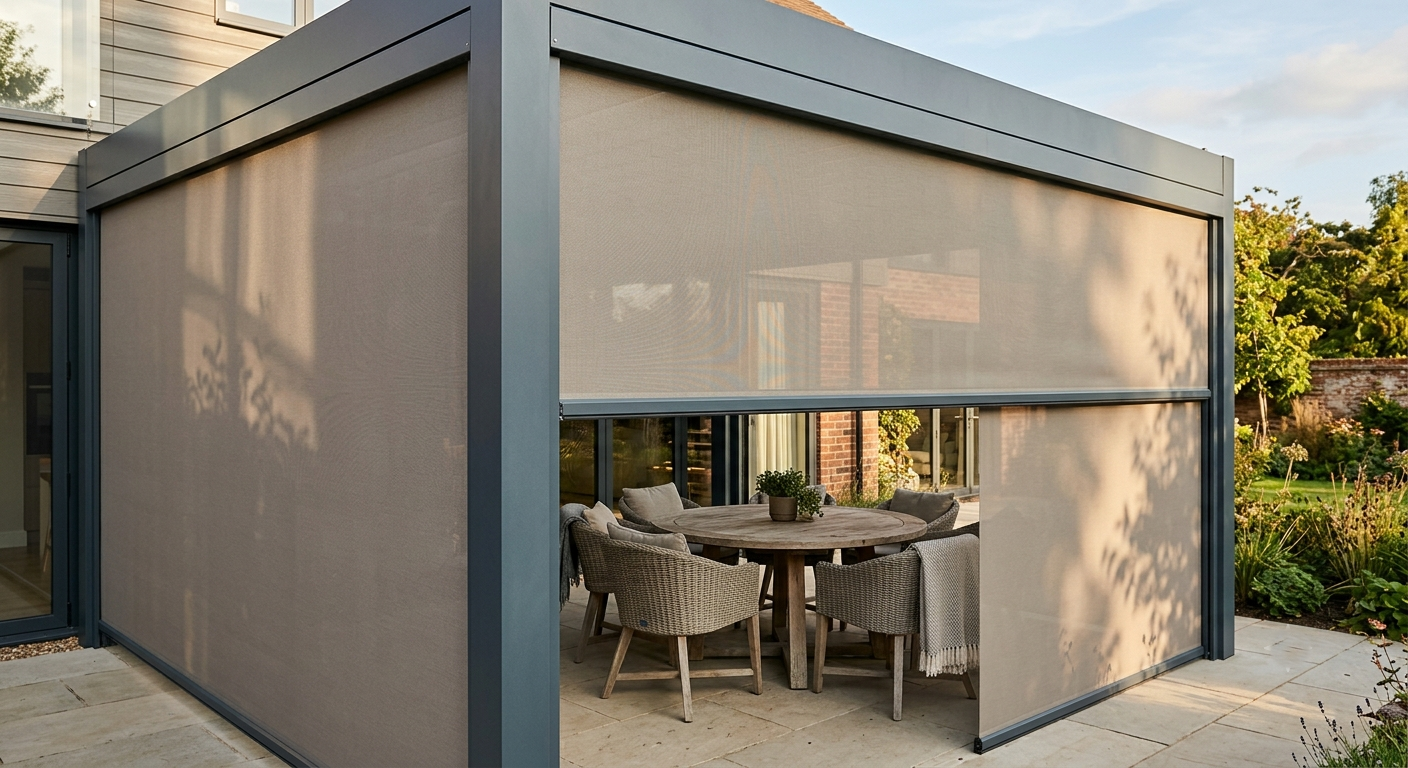
A zip screen works by locking a zip strip sewn onto the edges of the fabric into the side guide profiles. Because the fabric is held in the channels at its edges, it does not flap in the wind and insects cannot get in at the sides.
The fabric is rolled onto a shaft in the top cassette. The system can be operated manually or by motor; motorised operation is preferred for wide openings and high installations.
As it is designed for outdoor conditions, the fabric and profiles are selected with sun, rain and wind in mind. The system is made to measure and on-site measuring is free of charge.
Where It Is Used
Zip screens are most often used on balconies, terraces, pergolas and conservatory façades. They are also a common solution in the outdoor areas of cafés and restaurants, where wind and sun shorten the time the space can be used.
The enclosed area does not become completely sealed; however, the effect of the wind is noticeably reduced and direct sunlight is blocked. This extends the time the outdoor area can be used.
How the Zip Lock Works
In conventional outdoor blinds the edges of the fabric are free and can come out of the channel in the wind. In a zip system, the strip sewn onto both edges of the fabric runs inside the channel of the side profile and stays locked along the full length of the fabric.
This has two results: the fabric does not flap in the wind, and as there is no gap at the edges, insects cannot get in. Keeping the channel clean is necessary for the strip to run up and down smoothly.
Motorised and Manual Operation
Manual operation is preferred for easily accessible, medium-sized openings. Motorised operation is used for wide openings and high installations that are hard to reach; it is controlled by remote control or a wall switch.
Where several façades are closed at the same time, motorised operation is very practical. The motor and control are chosen during measuring according to the size of the opening and the electrical installation.
Key Features
- Fabric locked into side channels
- Does not flap in the wind
- Motorised or manual operation
- Suitable for outdoor use
- Made-to-measure production
Frequently Asked Questions
Can a zip screen withstand wind?
Because the fabric edges are locked into the side channels, there is no flapping in normal and moderate wind conditions. Nevertheless, no awning or blind system should be left down in storm conditions; the blind should be raised when strong wind is expected.
Does it keep insects out?
As there is no gap at the fabric edges, passage at the sides is prevented. However, a zip screen is not an insect screen; the fabric type and the seating of the bottom bar may not provide a complete seal. If insect protection is the priority, it should be combined with insect screen systems.
Should I choose motorised or manual?
For wide openings or high installations, motorised operation is recommended, as it makes access and daily use easier. For medium-sized, easily accessible openings, manual operation is enough. The electrical installation also affects the choice; we assess this together during measuring.
Can it be left down in winter?
When not in use, it is recommended to raise the blind and leave it in its cassette. Inside the cassette the fabric is protected from snow, hail and direct sun. Fabric that is always left down wears out faster.