Sliding Insect Screen
An insect screen with a sash that slides horizontally on a rail, compatible with sliding window and door frames.
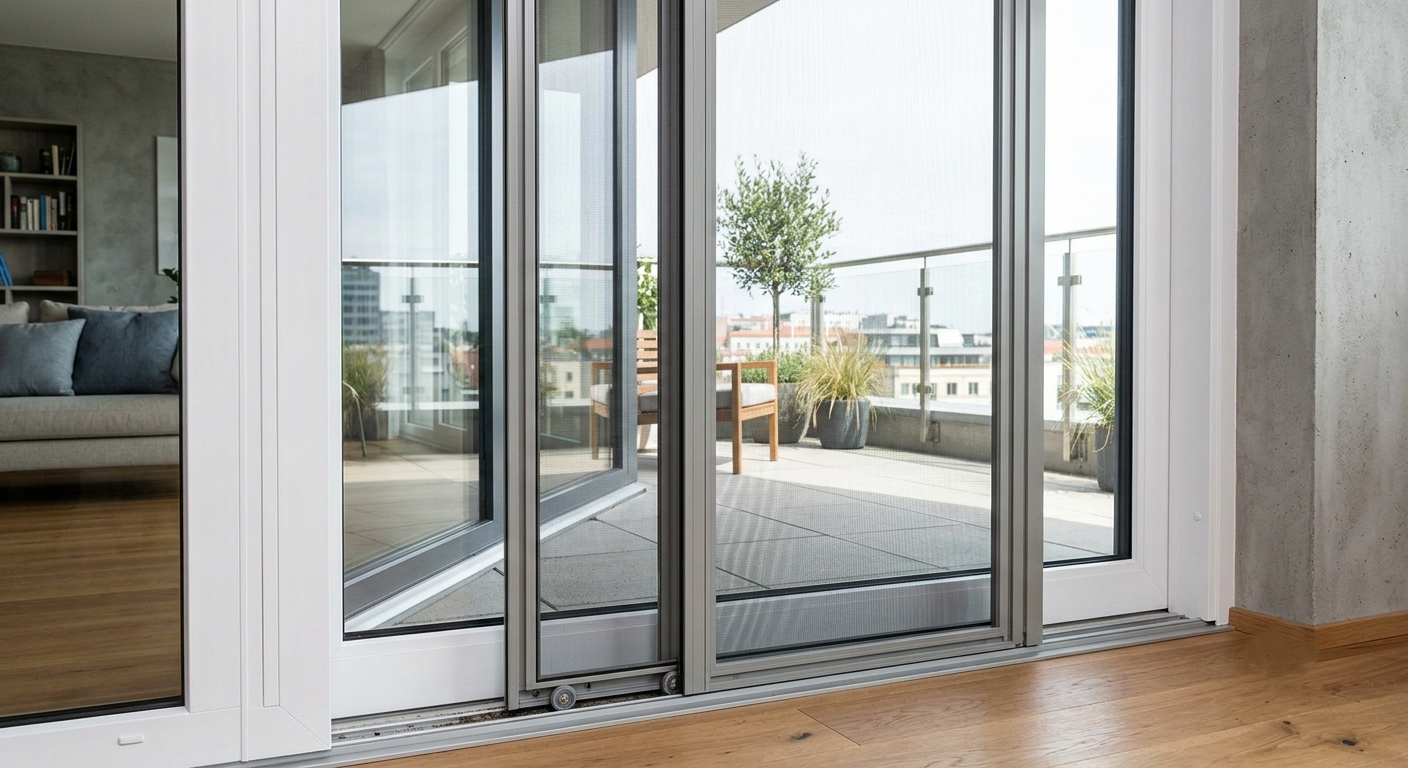
A sliding insect screen is a system whose sash, fitted with rollers, slides horizontally between a bottom and a top rail. Because it works on the same principle as sliding frames, it does not disrupt the flow when used together with the frame's own sash.
The sash is made as a single piece with the mesh tensioned inside the frame profile. Mesh tension is set in the workshop; on site only the seating of the rail and sash is checked. The roller system is chosen according to the weight of the sash, so movement stays smooth even on wide sashes.
For multi-sash sliding frames, the number of screen sashes is determined by the layout of the frame. Production is made to measure and on-site measuring is free of charge.
Where It Is Used
The sliding insect screen is the standard solution for sliding windows and doors. It is widely used on balcony exits, sliding kitchen windows and terrace doors. The screen sash is positioned so that it runs on the same line as the direction in which the frame's sash slides.
A sliding system is not suitable for hinged (casement) frames; for these frames a hinged insect screen door or a fixed-frame insect screen is preferred.
Rail and Roller Design
Two factors determine how well the system moves: the flatness of the rail and the choice of rollers. The bottom rail is the surface that carries the weight of the sash; if the mounting surface is not level, local high points form along the rail and the sash becomes stiff in certain places.
Rollers are chosen according to the width of the sash and the mesh area. On wide sashes the load on each point increases, so rollers with a high load capacity are used. The top rail has a guide that prevents the sash from leaving the rail; this guide is adjusted during installation.
Measuring
Measurements are taken along the outer frame line, taking into account the travel area of the existing sliding sash. The screen sash is sized to fully overlap the opening when the frame's sash is open; otherwise part of the opening is left unprotected.
For multi-sash frames, note which pane opens and in which direction it slides. If the screen is made without this information, the sash direction may turn out reversed. During on-site measuring this layout is recorded on a sketch.
Key Features
- Sash sliding horizontally on a rail
- Compatible with sliding frames
- Rollers chosen by sash weight
- Suitable for multi-sash installations
- Made-to-measure production
Frequently Asked Questions
Which frames is a sliding insect screen suitable for?
It is suitable for sliding windows and doors. If the frame's sash slides horizontally, a sliding insect screen is the natural solution. For frames that open on hinges, we recommend a hinged insect screen door or a fixed-frame insect screen.
What should I do if the sash becomes hard to move over time?
The most common cause of stiff movement is dust, sand and hair collecting in the bottom rail. Regularly vacuuming the rail solves the problem in most cases. If it is still stiff after cleaning, the rollers may need adjusting or replacing.
How many sashes can be made?
The number of sashes depends on the layout of the frame. A single sash is enough for frames with one opening pane; for sliding systems where both panes open, a double sash is made. The layout is recorded on a sketch during measuring.
Does the screen sash get in the way of the frame's sash?
Not when it is sized correctly. The screen runs on a separate rail line outside the travel area of the frame's sash. When measuring, the position of the frame's sash in the open position is used as the reference.