Hinged Insect Screen Door
An insect screen that opens on hinges like a door and closes with a spring mechanism. Suitable for frequently used entrance and balcony doors.
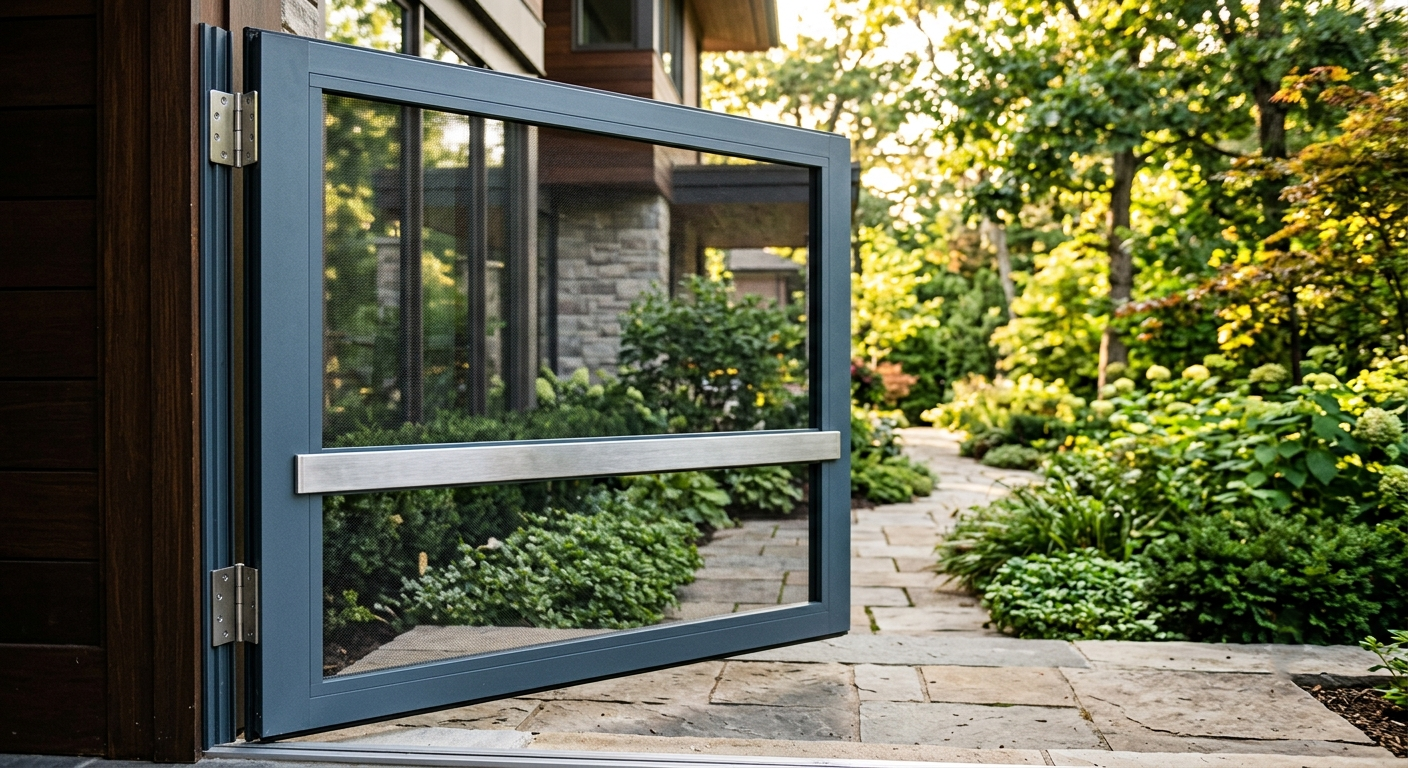
A hinged insect screen door is attached to the frame with hinges and opens and closes like a door. The sash carries tensioned mesh; the opening direction, right or left, is decided before production.
The defining feature of the system is its spring-closing mechanism. When released, the sash closes by itself with the force of the spring, so the door is not left open when you pass through with your hands full. The spring tension is adjusted to the weight of the sash.
The sash is made from frame profile designed to withstand door-sized loads. For frequently used entrances, the corner joints and hinge points are dimensioned for this load. Production is made to measure and on-site measuring is free of charge.
Where It Is Used
Hinged insect screens are preferred for doors used many times a day: garden and terrace exits, entrances of detached houses, back doors of businesses and storeroom passages all fall into this group.
Spring closing prevents the door from being left open, which makes it particularly useful for kitchen and service passages. When carrying a tray or a box, the sash can be pushed open with the shoulder and closes by itself when released.
Opening Direction and Hinge Position
The opening direction is chosen according to which way the door opens and how people move through it. If the frame's sash opens inwards, the screen is usually designed to open outwards so that the two sashes do not obstruct each other.
The position and number of hinges are determined by the height of the sash. On tall sashes more hinges are used, which reduces the tendency of the sash to drop (sag) over time. Whether the door opening is plumb is also checked before installation.
Spring Adjustment and Maintenance
The spring tension is set so that the sash closes by itself but does not slam. An over-tensioned spring is noisy and puts unnecessary load on the hinge points.
For maintenance, checking the hinge points once a year is sufficient. You can visually check whether the sash sits fully against the frame when closed; if a gap appears at the bottom corner, the hinges should be adjusted. The mesh is cleaned by wiping with a damp cloth.
Key Features
- Hinged opening like a door
- Self-closing spring
- Right or left opening
- Frame built for frequent use
- Made-to-measure production
Frequently Asked Questions
Does the sash close by itself?
Yes. The system has a spring-closing mechanism; when released, the sash closes with the force of the spring. The spring tension is adjusted to the weight of the sash, so it closes fully without slamming.
Can I change the opening direction later?
The opening direction depends on the hinge position, so it is decided before production. Changing it later requires repositioning the hinge and latch points on the frame. For this reason we assess the flow of passage together during measuring.
Is it suitable for homes with pets?
In hinged systems, the pressure on the lower part is higher than in other types. In homes with pets, a stronger mesh type can be chosen or a protective panel can be fitted to the lower part. Simply mention this preference during measuring.
Will the sash sag over time?
Sagging is not expected when the number of hinges and the corner joints are dimensioned for the sash height. More hinges are used on tall sashes. A gap at the bottom corner when closed is the first sign of sagging and is corrected by adjusting the hinges.